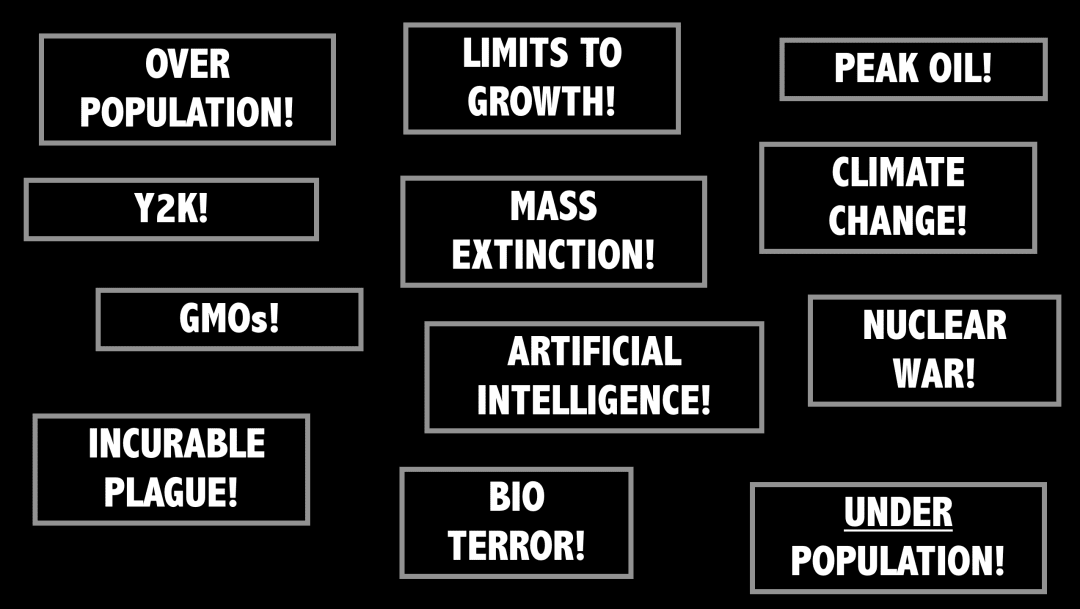
Most of our talk about civilization is about how it will END, and how soon, and why, and who’s to blame. These days, everything the public frets about gets elevated to where it has to be seen as an “existential threat” to civilization.
I think I know where that started, because I was seven in 1945 when the Japanese city of Hiroshima was destroyed by a single bomb.
Hiroshima and then the Cold War introduced a new idea to humanity—that we had the power to destroy the world.
My youth was poisoned at times by that dread.
…
A massive nuclear war now would be horrible. World War Two taught us how horrible it can be. It taught us that civilization would be traumatized… and then it would rise from the ashes.
Nuclear war now would not make civilization cease to exist.
Neither will mass extinction or climate change or artificial intelligence, serious as they are. In the coming decades, there will certainly be various kinds of calamities, and we will keep on surviving them and learning from them.
Our planet has been through a lot, yet Earth abides.
Humanity has been through a lot, yet we abide.
…
Civilization as a human practice has carried on steadily, progressively, in a variety of forms, ever since the first cities.
Civilizations come and go. Civilization continues.
Stewart Brand, “Unending World” (2024).